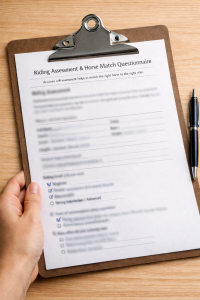
A safe, enjoyable ride starts with accurate self-assessment and clear expectations. This Riding Assessment & Horse Match Questionnaire gives instructors and trail operators a simple, professional way to understand a rider’s current ability, recent experience, and comfort level—so you can select the most suitable horse and plan the ride appropriately. It supports better outcomes for the rider, the horse, and the whole group.
1) How do I use this during normal bookings or lessons?
Use it as part of your standard pre-ride or intake process—no special setup required. Send it with booking confirmation, have riders complete it on arrival, or keep printed copies ready at check-in. It’s designed to be quick, clear, and practical for busy operations.
2) What if a rider isn’t sure what level to choose?
Encourage them to choose the lower option if they’re uncertain. Overstating ability can create discomfort and increase safety risk, while understating simply allows you to select a quieter horse and build confidence appropriately.
3) How does this actually help me match horses more accurately?
It captures the details that matter most: current riding frequency, recent open-country exposure, ability across paces, and confidence on varied terrain. This reduces “guess matching,” supports safer pairings, and helps you plan group pace and supervision levels more reliably.
4) How does this improve rider communication and expectations?
It gives you a clear, professional reference point if you need to explain a horse choice, a pace decision, or ride limitations. Riders are more likely to understand and accept a conservative match when it’s based on their own stated experience—and it helps everyone feel safer and more prepared.